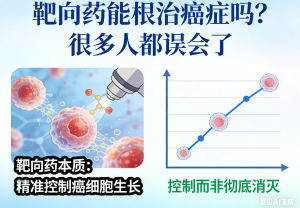


Many patients say: “After taking targeted therapy, my tumor shrank, and I feel better. Does this mean I’m cured?” This is a common misconception.
Targeted Therapy: Control, Not Complete Eradication
Targeted drugs work by blocking specific gene mutations or signaling pathways, helping tumors stop growing or shrink. Compared with traditional chemotherapy, they are more precise and generally have fewer side effects.
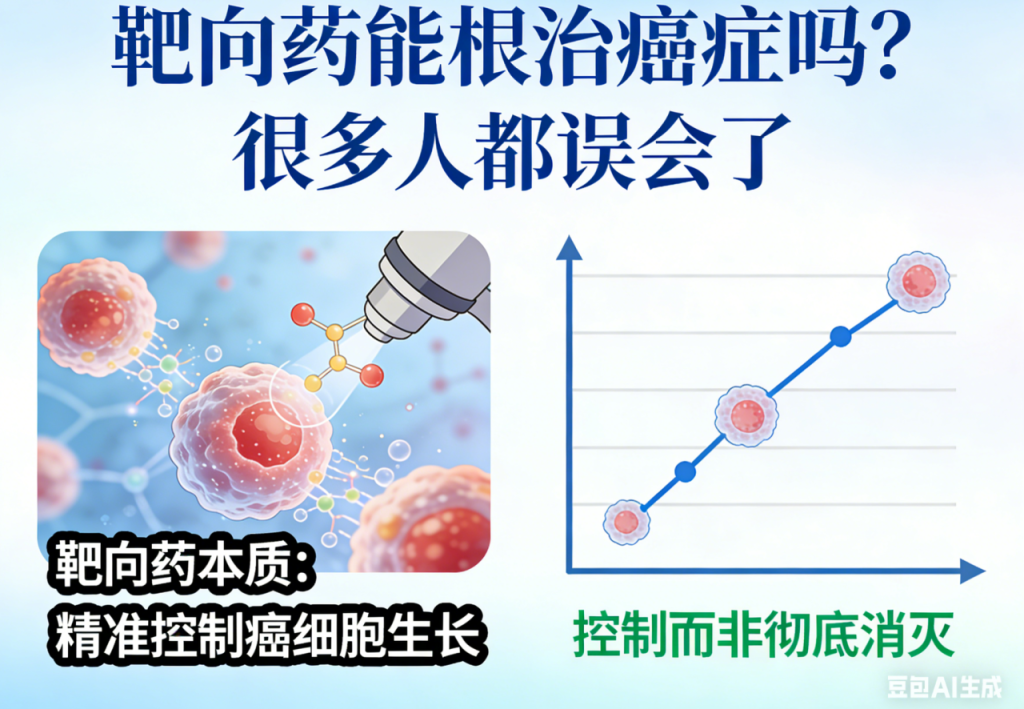
However, in most cases, targeted therapy controls the disease rather than completely eliminates it:
-
Effect is mutation-specific: Targeted drugs can suppress tumor cells carrying certain mutations, but other tumor cells may survive. Complete eradication is rarely achieved.
-
Resistance eventually occurs: Tumor cells can adapt, change mutations, bypass blocked pathways, or expel the drug, leading to drug resistance over time.
Even third-generation targeted drugs, which can prolong control, are not immune to this challenge.
Why Some Patients Feel “Cured”
Targeted therapy often converts cancer into a manageable chronic condition. Certain cancers, such as some lung or breast cancers, may remain stable for years under therapy, allowing patients to live normal lives. This can create the impression of a cure, though the risk of recurrence or resistance remains.
Value of Targeted Therapy
-
Extends survival
-
Improves quality of life
-
Provides opportunities for subsequent treatments
-
Helps transform cancer into a chronic, manageable condition
Conclusion
Targeted therapy is highly effective but not curative. It controls tumors and prolongs stability, but monitoring and follow-up remain essential. The key is a rational approach: effective management, not blind optimism.
Eltromin 25/50 Eltrombopag
Enatinib 4/10 Lenvatinib
Lynparib Olaparib
Coltinib Upadacitinib
Alvonib Osimertinib
Techno
Well-known pharmaceutical company in Bangladesh:https://www.radiantpharmacil.com







暂无评论内容